The 80-Minute Problem
Most sunscreen quits before you do. Here's the test that decides whether protection survives an hour of real effort.
An SPF number on a bottle is a lab measurement, taken on still skin under a fixed dose. It tells you what the formula can do in the best possible conditions. It says almost nothing about what happens forty minutes into a hot session, when you are soaked, wiping your face, and the film that was protecting you is sheeting off with the sweat.
That gap — between the labelled SPF and the SPF still on your skin — is the whole problem. We design around the second number, not the first.
What the 80-minute test actually measures
Very water-resistant sunscreens are tested by applying a measured dose, immersing the wearer for four ten-minute soaks with rest in between, and re-reading the SPF afterwards. Eighty minutes in water is the bar. Pass it and you can claim the film holds. It is the closest standard test to an hour of heavy sweat, and most formulas that clear it on paper still shed badly the moment they meet friction — a strap, a sleeve, the back of a hand.
Protection you sweat off in twenty minutes was never protection. It was a number on a bottle.
— NEUDAY Lab
Why a mist holds where a lotion slides
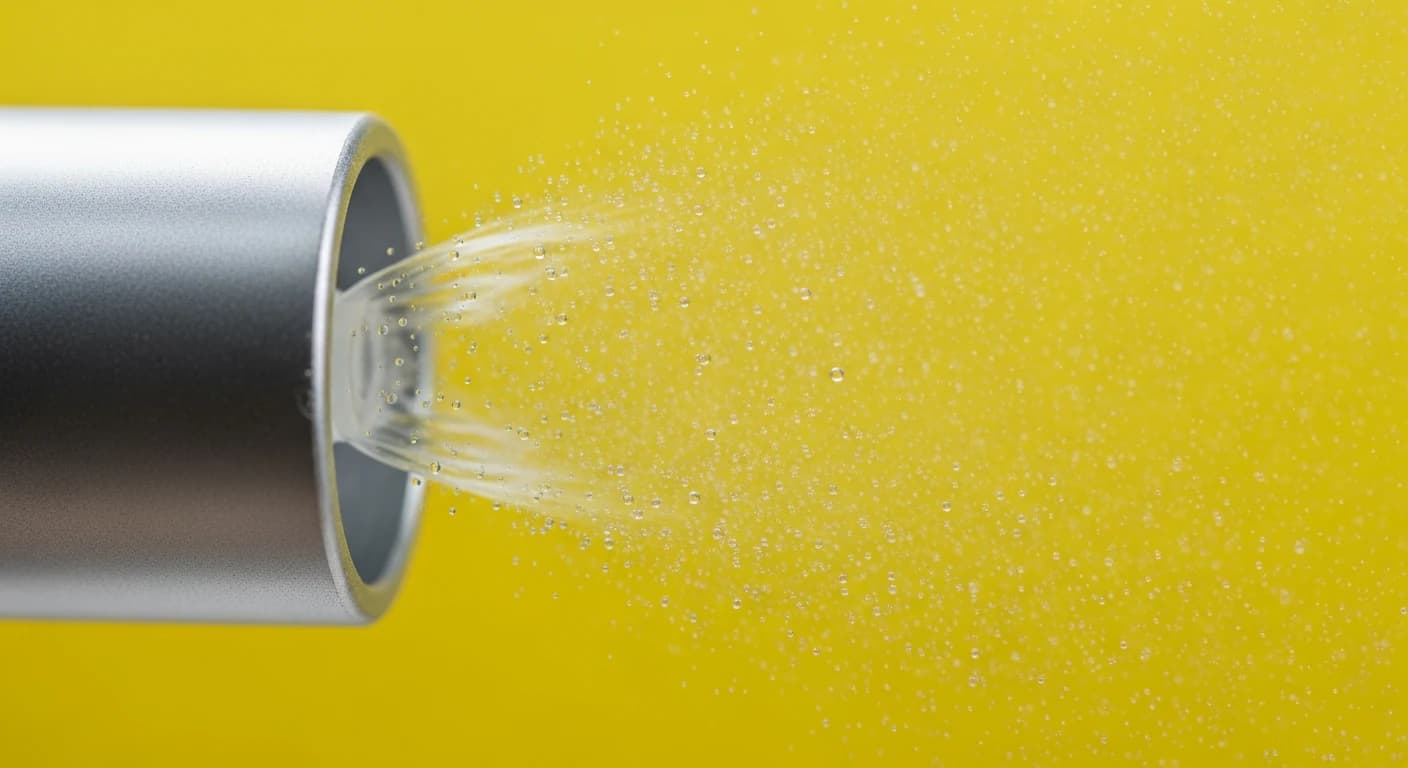
Solar Spray lays down a 55-micron film that keys into skin instead of sitting on top of it. In our 80-minute sweat protocol it retains 96% of its SPF; a standard lotion in the same test holds 43%. The difference is not the filters — it is the film. Smaller, more even particles mean fewer thick spots to slide and fewer gaps to burn through.
- Look for the 80-minute water-resistance claim, not just the SPF.
- Re-apply every two hours, and immediately after a towel or a swim.
- A film you can feel sliding is a film that has already stopped working.
None of this replaces shade and a cap. It buys you the hours when those aren't an option — which, if you train outdoors, is most of them.